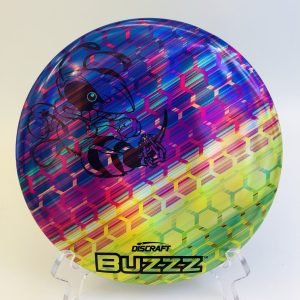




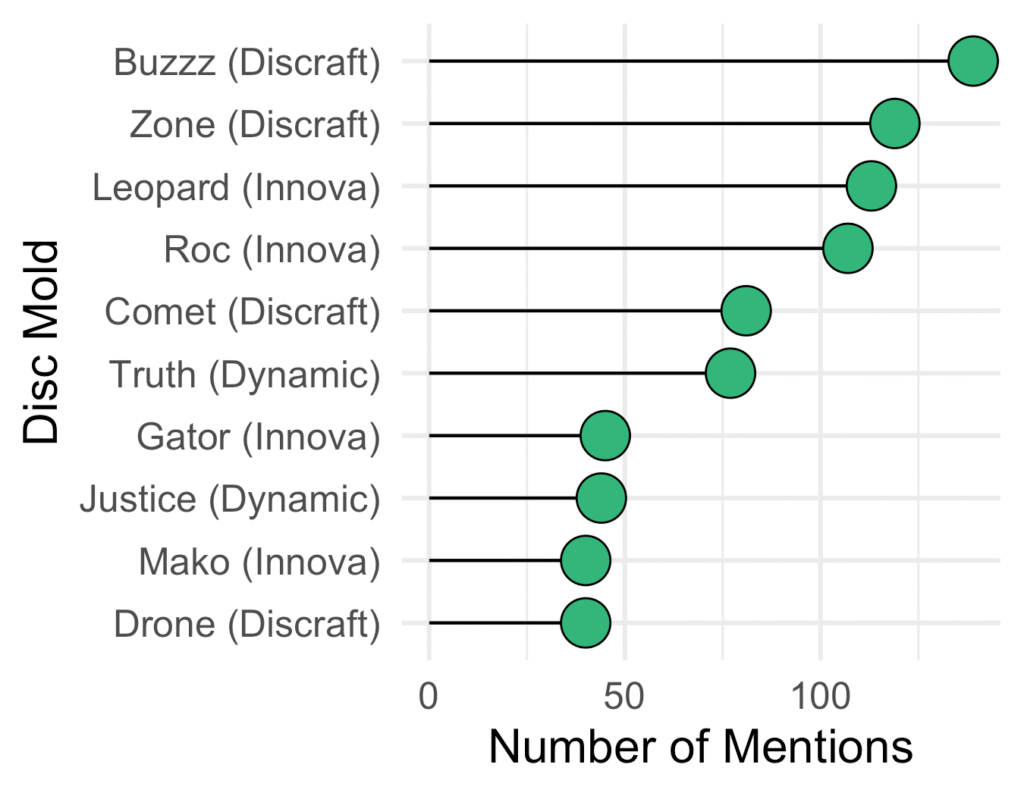
WHy the buzzz dominates the fairway?
When it comes to consistency, reliability, and straight-flight performance, few discs in history carry the weight of the Discraft Buzzz. Since its release in 2003, the Buzzz has become the “Swiss Army Knife” of the disc golf world—an essential tool for everyone from first-time players to 6-time World Champion Paul McBeth.
The magic of the Buzzz lies in its neutral stability. It is a disc that truly listens to the player: throw it flat, and it stays dead straight; put it on an anhyzer, and it holds a smooth, panning turn. This “point-and-shoot” capability makes it the premier choice for hitting tight gaps in wooded courses or navigating technical tunnel shots.


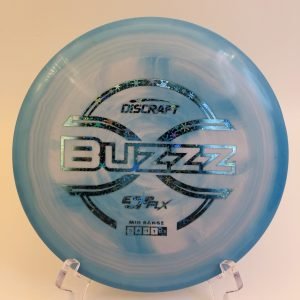

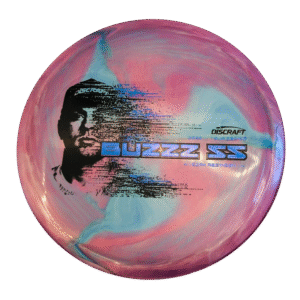

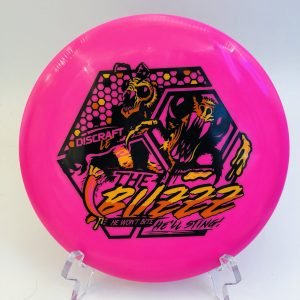
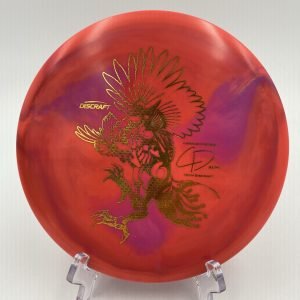

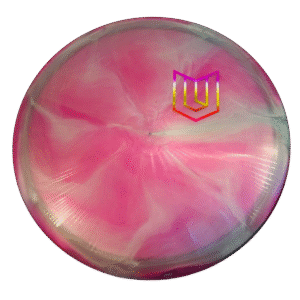


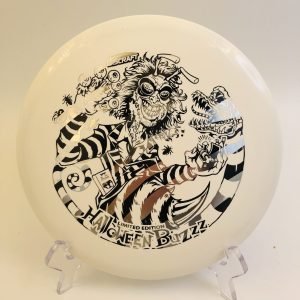
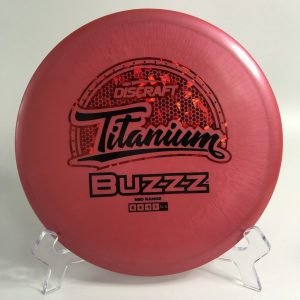

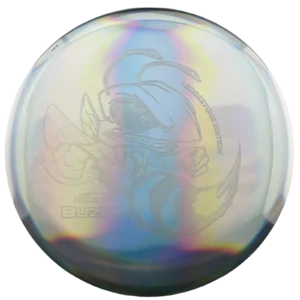

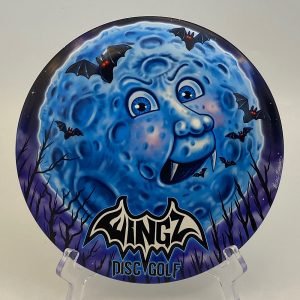
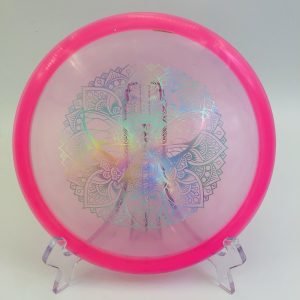
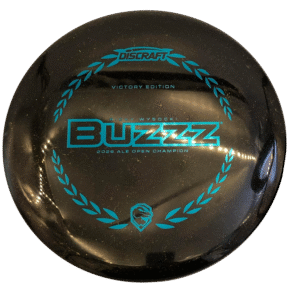
BUZZZ Flight chart
The Discraft Buzzz is legendary for one specific reason: it possesses the straightest flight path in disc golf. With a Discraft Stability Rating of 0.5, it sits perfectly between understable and overstable, making it a neutral-flying masterpiece that holds whatever line you put it on.
Understanding the Flight Numbers: 5 | 4 | -1 | 1
To understand how the Buzzz flies, we have to look at the synergy of its flight ratings:
- Speed (5): It requires moderate power to reach its full potential, making it accessible for beginners but rewarding for pros.
- Glide (4): The Buzzz doesn’t “sail” uncontrollably; it offers a predictable, controlled loft that helps it stay on target.
- Turn (-1): At high speeds, the disc will exhibit a very slight, gentle drift to the right (for RHBH throwers) before leveling out.
- Fade (1): As the disc slows down, it has a soft, dependable finish. It won’t “dump” hard, but it won’t vanish into a “turnover” either.
Performance Across Different Angles
This is where the Buzzz shines as a “workhorse” midrange. Because of its neutral stability, it responds intuitively to your release angle:
- The Flat Release: When thrown flat and hard, the Buzzz will fly laser-straight for about 80% of its flight before a gentle, forward-penetrating fade at the end.
- The Hyzer Flip: For players with higher arm speeds, throwing the Buzzz on a slight hyzer will cause it to “flip up” to flat and carry straight for maximum distance.
- The Anhyzer Line: If you release it on an anhyzer (tilted right), the Buzzz will hold a long, beautiful panning turn. Unlike more understable discs, it won’t “roll over” and hit the ground early; it fights just enough to stay aloft.
Wind Performance & Reliability
While many straight-flying discs struggle in the wind, the Buzzz’s thin profile and consistent mold allow it to cut through moderate breezes with surprising stability. It is the disc you reach for when you need a “touch” shot that you can trust not to deviate from its intended path.

Who Should Throw the Buzzz?
The beauty of the Discraft Buzzz is its “chameleon-like” ability to adapt to any bag. Because it is neither aggressively overstable nor unpredictably flippy, it serves a unique purpose for every skill bracket.
1. The Beginner: Your First “Real” Midrange
If you are just starting out, the Buzzz is the ultimate teacher.
- Why it works: Beginners often struggle with “hyzer-out” (the disc diving left too early). The Buzzz’s high glide and neutral flight help it stay in the air longer even with lower arm speeds.
- The Goal: Use it to learn how to throw a flat, level line. If the Buzzz flies straight for you, your technique is on point.
2. The Intermediate Player: The “Workhorse”
As your arm speed increases, the Buzzz becomes the disc you reach for 50% of the time.
- Why it works: It’s the perfect tool for 60-90 meter tunnel shots. It handles the torque of a maturing throw without “burning over” (turning into the ground), yet it won’t dump hard at the end.
- The Goal: Use it for “hyzer-flips” where the disc starts on an angle, pops up to flat, and carries dead straight to the basket.
3. The Professional: Precision & Control
For elite players, the Buzzz is about “holding the line.”
- Why it works: Pros use the Buzzz for shots that require zero surprises. Whether it’s a soft turnover that lands flat or a power-straight shot that needs to stop on a dime, the Buzzz provides the most predictable result in the game.
The Buzzz variants
| Variant & Plastic | Flight Numbers | Stability | Feel & Grip | Best For (Player Type) |
| Buzzz (Z-Line) | 5 | 4 | -1 | 1 | 0.5 | Slick, stiff, extremely durable. | Intermediate/Advanced: Power players who want a disc that stays “factory fresh” for years. |
| Buzzz (ESP/Swirly) | 5 | 4 | -1 | 1 | 0.5 | Tacky, premium grip, unique colors. | The “Goldilocks”: Best for everyone. Our top recommendation for all-around play. |
| Buzzz (Titanium) | 5 | 4 | -1 | 1 | 0.6 | Metallic, very stiff, slightly “beefy.” | Advanced: High-power players looking for a touch more overstability. |
| Buzzz (Jawbreaker) | 5 | 4 | -1 | 1 | 0.4 | Soft, rubbery, high-friction grip. | Cold Weather / Beginners: Perfect for winter rounds or those who prefer a “velvet” feel. |
| Buzzz (Z-Flx) | 5 | 4 | -1 | 1 | 0.5 | Gummy, flexible, high-impact. | Wooded Courses: Players who hit trees often; the plastic absorbs shock instead of kicking far. |
| Buzzz SS (Z-Line) | 5 | 4 | -2 | 1 | 0.0 | Thinner rim feel, smooth release. | Beginners: Helps newer arms achieve a straight flight without “dumping” left. |
| Buzzz SS (ESP) | 5 | 4 | -2 | 1 | 0.0 | Comfortable, soft-edge rim. | Finesse Players: Perfect for “Hyzer-flips” and long, late-turning anhyzers. |
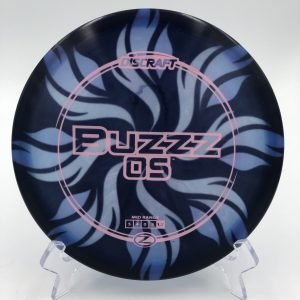
| Buzzz OS (Z-Line) | 5 | 4 | 0 | 3 | 1.7 | Boxy rim, very stiff, flat top. | Power Arms / Forehand: Players who need torque resistance and a hard finish. |
| Buzzz GT (Z/CryZtal) | 5 | 4 | -1 | 1 | 0.5 | Features a “Groove Top” thumb track. | Thumb-Track Fans: Players who like a physical reference point for their thumb. |
| Buzzz Saw (Ltd Ed) | 5 | 4 | -0.5 | 1.5 | 0.7 | Premium, often collectible runs. | Collectors/Vets: Those who want a “beefier” Buzzz that isn’t quite an OS. |
Choosing the right Buzzz variant isn’t just about the name; it’s about how it fits into your specific “bag logic.” Here is what the DisCats team recommends you keep in mind:
1. The “Stability Gap”
If you are currently throwing a Standard Buzzz and it keeps “turning over” (drifting too far right for RHBH), don’t just buy a heavier one—move to the Buzzz OS. If you find the Standard Buzzz is fading too early, the Buzzz SS is your solution. Building a “Buzzz Trio” (SS, Standard, OS) allows you to use the same hand feel for every midrange shot on the course.
2. The Weather Factor
- Summer/Heat: Stick with Z-Line or Titanium. These plastics stay firm when it’s hot.
- Winter/Cold: Switch to Z-Flx , Cryztal Flx, ESP Flx or Jawbreaker. Standard premium plastics can become “glassy” and slick in the cold; these flexible blends remain grippy and safe to throw below 5°C.
3. The “Disc Cycling” Strategy
Pro players often carry 3-4 ESP Buzzzes in different stages of wear.
- Fresh ESP: Straight with a reliable finish.
- Seasoned ESP (1 year of use): Dead straight for the entire flight.
- Beat-in ESP (2+ years): Becomes a “natural” Buzzz SS that holds a slow turn. Buying a Pro-D or X-Line Buzzz is the fastest way to “season” a disc if you want that understable flight quickly.
The Midrange Showdown: Buzzz vs Mako3 VS HEx VS Truth VS Compass
| Disc Model | Brand | Flight Numbers | Key Difference from Buzzz | Recommended For |
| Buzzz | Discraft | 5 | 4 | -1 | 1 | The “Standard.” Neutral and reliable. | All-around consistency. |
| Mako3 | Innova | 5 | 5 | 0 | 0 | Higher glide, zero fade. It stays dead straight until it hits the ground. | Tunnel shots & form checks. |
| Hex | Axiom | 5 | 5 | -1 | 1 | Faster “hand speed” feel due to its slim profile and GYRO overmold. | Modern feel & extra distance. |
| EMac Truth | Dynamic Discs | 5 | 5 | 0 | 2 | Faster and more overstable. It handles wind better than a standard Buzzz. | Power players & windy days. |
| Compass | Latitude 64 | 5 | 5 | 0 | 1 | Slightly deeper rim feel; very predictable straight-to-stable flight. | Players who prefer a fuller grip. |
Choosing between these legendary midranges often comes down to release confidence and finish preference. If you find that your Buzzz has a bit too much “finish” (fade) at the end of its flight, the Innova Mako3 is the logical alternative, as its “0 Fade” rating allows it to land perfectly flat without any lateral movement. Conversely, if you play in open areas where the wind might push a neutral disc around, the Dynamic Discs EMac Truth offers a more “aggressive” stability that provides a safety net for high-power throws. For the modern player who prefers a shallow, ergonomic rim, the Axiom Hex has quickly become the primary rival to the Buzzz, offering a similar flight path but with the added “gyro” effect that many feel provides a more consistent spin. Ultimately, while the Buzzz remains the most versatile “point-and-shoot” disc in the 60–90m range, the choice of an alternative should be based on whether you need more glide (Hex/Mako3) or more dependability in the wind (EMac Truth).